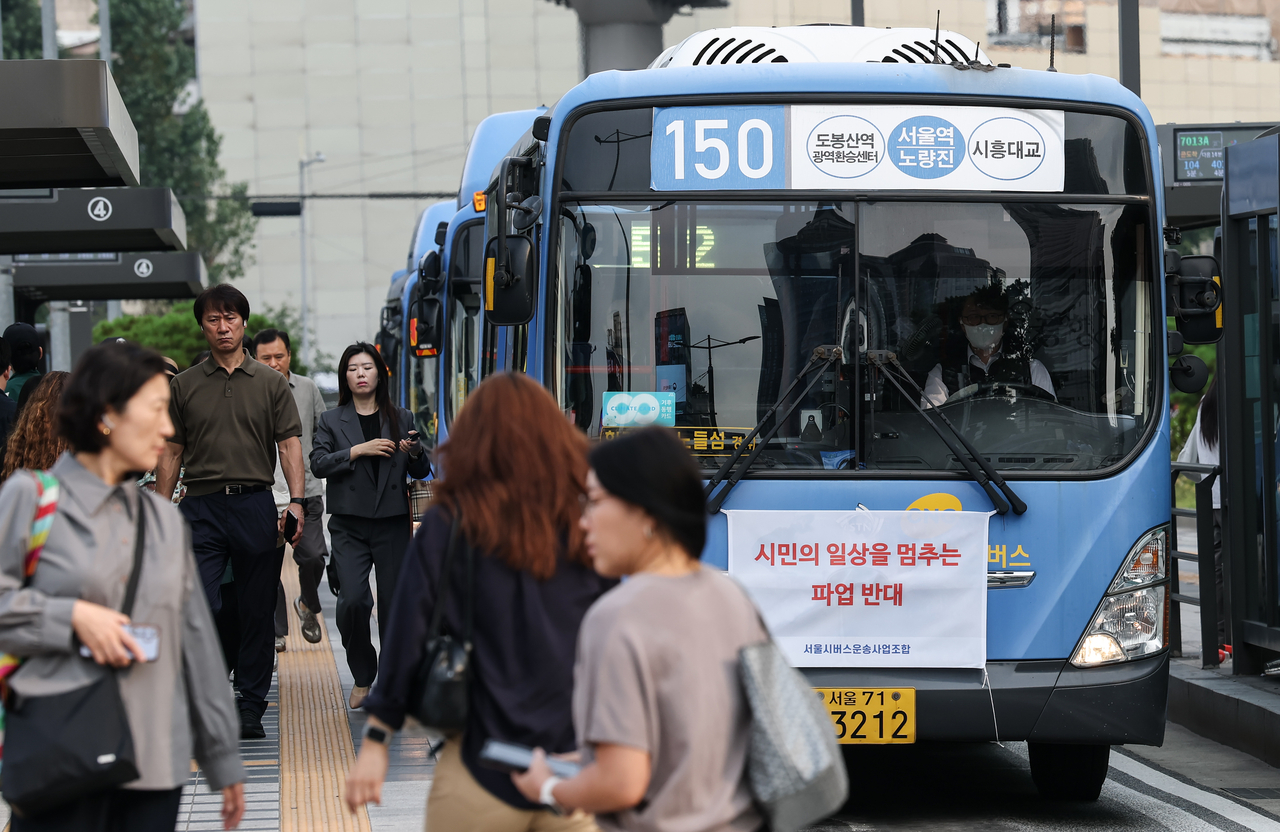
Seoul will deploy as many as 1,500 free shuttle buses and add more than 200 subway services if city bus drivers go on strike Wednesday, as the capital prepares for what would be its second bus walkout this year.
The Seoul Metropolitan Government said Monday that the emergency transport measures would take effect if the union proceeds with the strike from the first service Wednesday.
Up to 1,300 chartered buses will operate as free shuttles linking residential areas and major transport hubs with subway stations across Seoul's 25 districts.
Another roughly 200 buses will run on 10 routes along major arterial roads, including Gangnam-daero, Tongil-ro and Dobong-ro, to support travel between districts.
The shuttle operation would be more than twice the scale of the one used during the January strike, when about 700 vehicles were deployed. The city said it could add more buses on major routes if the walkout is prolonged.
Subway services will be increased by 202 runs a day, with rush-hour operations extended by a total of four hours. The last trains will run until 2 a.m.
Roadside bus-only lanes will be temporarily opened to regular vehicles during the strike, while median bus lanes are to remain restricted to buses.
Seoul also plans to deploy village buses on temporary trunk routes and offer free use of its Ttareungi public bicycle service.
Schools, public agencies and private companies will be asked to consider delaying start times by one hour, while employers will be encouraged to use remote or flexible work arrangements where possible.
The strike threat comes as labor and management remain divided over wages and how ordinary wages should be calculated after nine rounds of negotiations since March.
The union is seeking a 176-hour monthly basis for calculating ordinary wages and a 7.85 percent increase in hourly pay, while management favors a 209-hour basis.
A second round of mediation at the Seoul Labor Relations Commission is scheduled for Tuesday. In a strike vote last week, 87.94 percent of union members at 61 regular bus operators backed industrial action.
The dispute follows a two-day strike in January that ended with a wage agreement but left unresolved differences over how ordinary wages should be reflected in the pay system.
Seoul's city bus system operates about 7,000 buses a day and carries more than 3.79 million passengers on average.
"We will mobilize as many alternative transportation options as possible to minimize inconvenience to residents," said Yeo Jang-kwon, head of Seoul's transportation office.
Yeo urged labor and management to use the remaining time to reach what he called a reasonable agreement acceptable to the public.
hnpark@heraldcorp.com